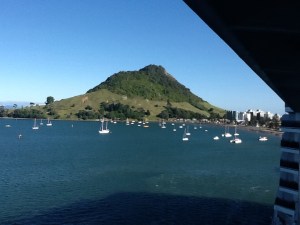
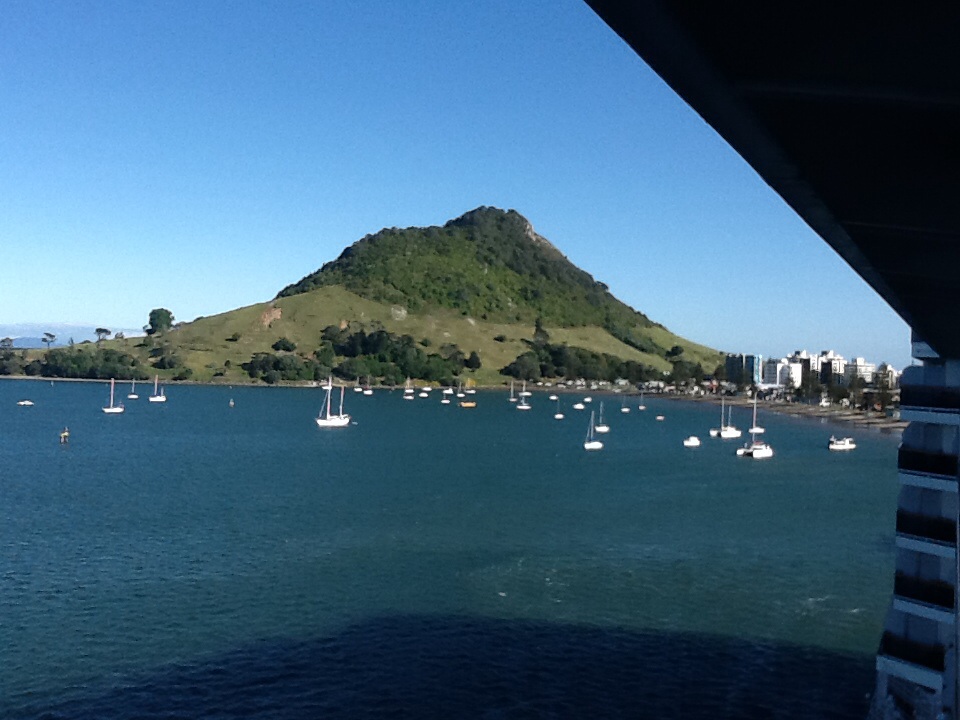
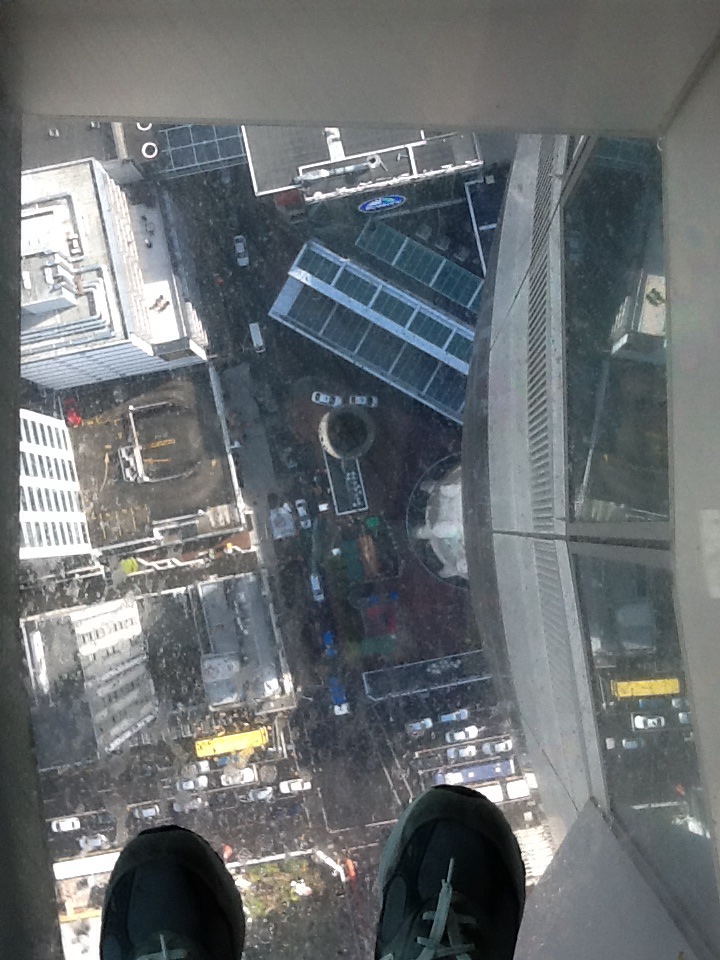
This is a extinct volcano that marks the Taurana harbor where we docked this morning.
Today was another great day except we left on our shore excursion with the iPad still in the room. Hence, only one picture today which was taken when we arrived in the port of Tauranga after sailing all night. So we will promise to really, really do better tomorrow on the pictures and we will see more Maoris in two days so the pictures on those very interesting people then.
We boarded the buses midmorning and drove through Te Puke (pronounced Tay Pookay instead of something else some of you might have thought of) which is the Kiwi Fruit capital of the world. We didn’t know it before, but Kiwi fruit grows on vines held above the ground kind of like grapes. Our bus driver was really into kiwi fruits and told us much more than we ever wanted to know – but we won’t bother you with the rest.
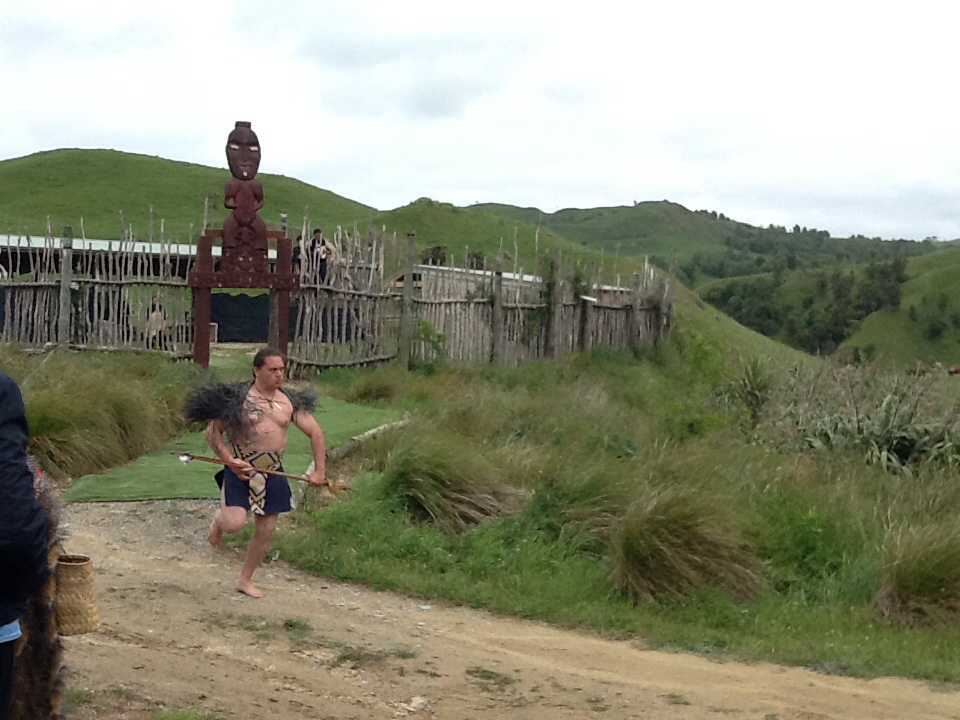
Our first stop was the Maori village of Mitai where we were met with the traditional greeting of Kai Oro which as you might guess means welcome. We then saw a canoe (waka) demonstration and a show which included weapons drills, poi ball twirling, and dancing and singing as well as a number of talks on the Maori culture. After all that great stuff we hand a hanji (fire pit) meal which was really good. This part of the trip was outstanding and we are really looking forward to visiting another Maori site in two days.
From there we went to Rainbow Springs to view some of the biggest rainbow trout (one was 42 pounds) I have ever seen and learn about their Kiwi preservation program. The biggest contributor to the very large drop in the kiwi population is a result of predators (bushy tail possums and other mammals) who either eat the eggs or the babies before they can protect themselves. As Carol noted yesterday, and adult kiwi is about the size of a small cat (it looked more like a bowling ball to me) and so they can pretty well protect themselves when they are full grown. Anyway, what Rainbow Springs does is find the kiwi burrows, pick up the eggs, incubate and hatch them, and return the resulting chicks to the wild – after they are big enough to defend themselves. They had two recently hatched chicks – one of whose name was Fat Freddy – and was he ever cute! A kiwi lays an egg almost the size of an ostrich egg but the bird is much smaller. Not only are the eggs huge, but she lays two at a time three times a year. Yet it is estimated that only 5 chicks grow to be adults for every 100 eggs laid. So the Rainbow Springs program is a big help but I don’t know how they ever find kiwi burrows in the first place. The woods are really thick and overgrown and the kiwis only come out at night.
Finally we went to the Hell’s Gate thermal springs. This was our least fun part of the today’s trip. As you can imagine, thermal springs are hot (actually hotter than boiling water in some cases) so doing this under an afternoon sun was really tiring. We saw steaming water and bubbling mud over and over again and it was a long hour of seeing what seemed to be the same thing forever. The mud in these pools has some medicinal value (you can smear it on you or even eat it) but neither Carol nor I thought we wanted that goop all over us, although most other people touched it or spread it on their hands. After seeing Yellowstone National Park, this was kind of disappointing.
On the way back to the ship, the bus driver explained that gas (petrol) costs about $9 a gallon in New Zealand, but diesel is only about $6 a gallon. This is the reverse of what it is in the US, but here, diesel vehicles also have to buy distance credits (based on truck/bus size) so it is possible to still have fuel in your tank but run out of distance credits. This means that the police can stop you for “driving to far’ and Slap you with a big fine. And all we have to worry about is driving too fast. He also showed us that all the telephone poles have metal bands around them so the possums that eat the kiwis can’t climb them. Before the bands were put around the poles, the possums would climb them, get electrocuted, and cause power outages. New Zealand possums are about twice as big as the ones in the US and have bushy tails
Off to bed now, but more tomorrow.





 The Devil Made Me Do It